
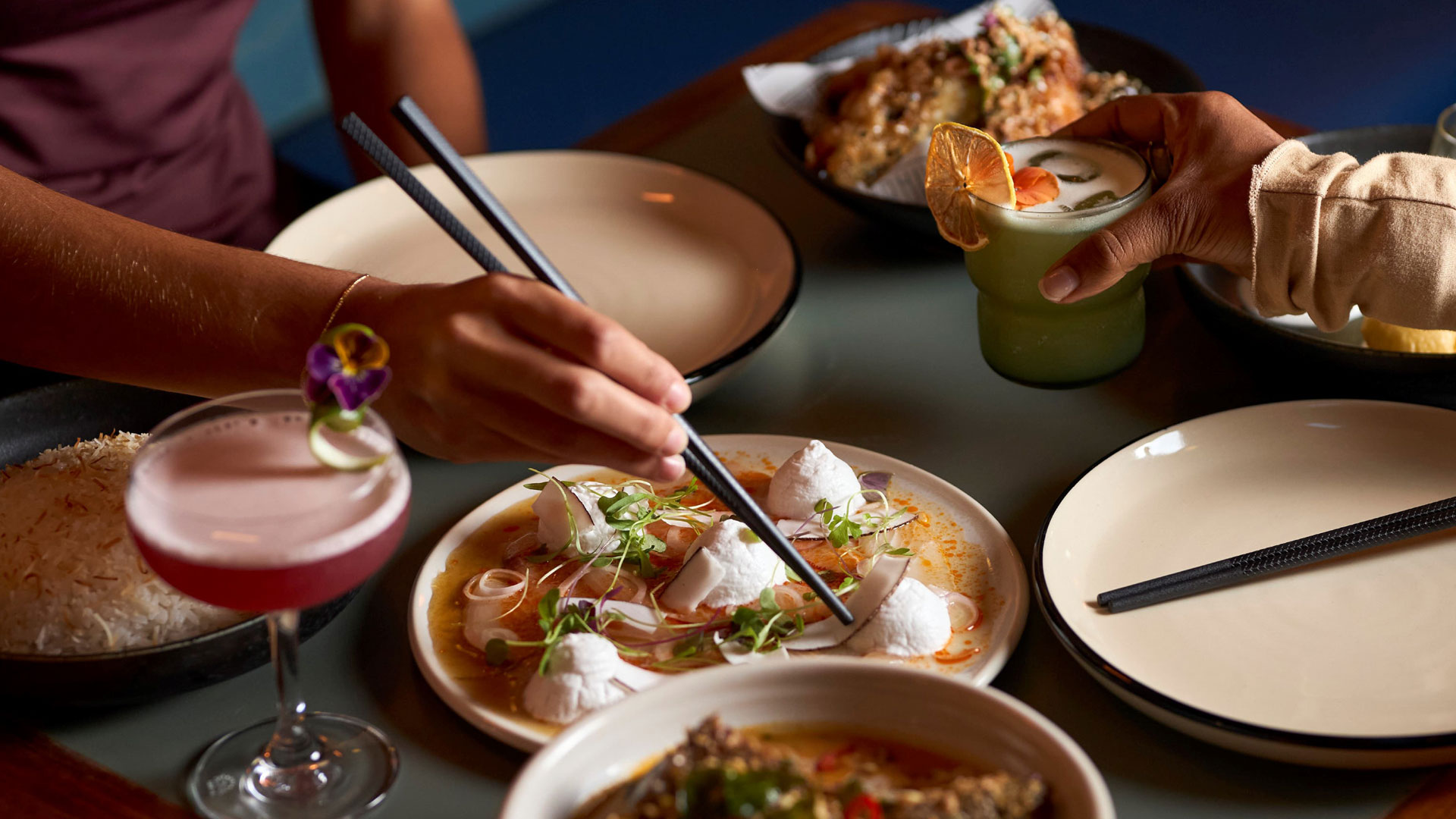
From bánh mì to laksa, phở to pad Thai, dishes from Vietnam, Thailand, Malaysia and beyond have changed the way we eat as a nation. With a focus on light, bright flavours and a balance of sweet, sour, bitter, salty and spicy, the cuisine of Southeast Asia has overhauled our kitchens. It has pushed heavy European traditions aside in favour of a fast and fresh new way of cooking that has shaped the very heart of what we now call Australian cuisine.
The waves of migration from the region saw the introduction of not just food, but introductions to culture and homeland. And soon it became a two-way street. Australians from diverse backgrounds began heading north to experience the authentic and the exotic – one mouthful at a time. Backpacking, beach holidaying and eating their way through the region, many Australian chefs undertook a kind of degustation pilgrimage in self-taught Asian cuisine.
The result? Australian chefs and restaurants began not only serving authentic and exciting Southeast Asian dishes with culinary fluency but also weaving techniques and ingredients into the very fabric of what we now consider Australian cuisine.
Amanda Scott had dreamed of opening a Vietnamese-inspired restaurant since her twenties. The Brisbane restaurateur finally got her chance during COVID, when her hugely popular Farmhouse Kedron – a café offering brunch and lunch, which she owns with husband John Scott – began offering Vietnamese specials. The response was overwhelming and led to the opening of Oh Boy, Bok Choy! in nearby suburban Stafford.
“Australians love food from Southeast Asia,” says Amanda. A warm and gregarious woman, her love for good food is palpable. “It’s the food we associate with good times – dining out with friends, overseas holidays, celebrations. Most Australians will holiday at some point with our northern neighbours. We’re part of the region. And with all the immigration and tourism, the dishes have become part of our own culinary landscape,” she says. “And the lightness and freshness of the food makes sense in our climate.”
Like many Australians of European background, Amanda was raised on meat and three veg. But a trip to Vietnam as a young woman turned her world upside down. “It was like something from another planet. For many people of my era, the more exotic foods from Thailand, Vietnam and Malaysia weren’t part of our world. Sure, there was suburban Chinese, but not these incredibly sensual aromas of Vietnamese mint, royal Thai basil and lemongrass,” she says. “My children, by contrast, have never known life without them. Southeast Asian cuisine is just part of life for most young Australians.”
Oh Boy, Bok Choy! is an oasis of great food on a busy strip in Brisbane’s north, housed in an old tram depot. The car park has been transformed with sandstone and lush bamboo plantings, while the interior features wooden floors and a high green banquette – a hue popular in house-shop eateries from Saigon to Siem Reap. The menu blends regional flavours including a massaman curry made with slow-cooked beef cheek, and a creamy, locally made burrata slathered in nahm jihm made from coriander, lime and fermented fish sauce.
“Our best seller is the whisky tamarind pork belly,” Amanda says. “It takes ten hours to cook – the ovens are going all night! Served with pickled watermelon, carrot, daikon, Asian herbs and fresh chilli, we work really hard to keep up with demand.”
The founding chef was Brisbane-born Hieu Dinh. Trained in classic French cuisine at the Hilton, he learned to cook from his Vietnamese-born parents. “We asked Huey and the other chefs, who come from other parts of Asia, to dig deep into their family dishes,” says Amanda. “The only problem was, their mums and grandmothers don’t use written recipes,” she laughs. “It’s all in their heads and adapted as fresh produce changes with the seasons.”
Another passionate advocate for Southeast Asian cuisine is Chris Mitchell, Group Executive Chef for the Darling Group. Chris, alongside Culinary Director, Ash Hicks, oversees the Victorian hospitality company’s portfolio of 11 restaurants and cafés. Two of them are exclusively Asian, while another three have dedicated wok sections. “The food of Thailand, the Philippines, Vietnam and other countries has exploded in the past decade,” he says.
“Southeast Asian food is part of our national DNA,” Chris says. “Eating your way around the region has become a national rite of passage!”
Chris spent four months as a young man backpacking through Thailand, Vietnam and Indonesia. “It’s the sight, the smell, the raw energy, colour and fragrances that stay with you long after you’ve returned home.”
With a few years as a chef under his belt, Chris felt he could take on a local wet market in Vietnam. Travelling with a Kiwi mate, the two bought a pair of crayfish, some ginger, galangal and lemongrass for Asian aromats, plus carrot and celery for a mirepoix. Then they approached an old woman at a stall cooking on a wok. They told her they wanted to make a stock in which to cook the crustaceans. Shortly afterwards, they were sitting on the rooftop of their cheap hostel, eating aromatic crayfish from a plastic bag. “I think that could have been my first dabble into what is called fusion cuisine,” Chris laughs. “But it’s that fun, fast and loud experience people are looking for.”
Today, Chris makes sure his kitchen teams deliver that same authentic energy. “That’s why we have chefs from the region in senior positions,” he says. “They draw on their knowledge, develop specials and new dishes themselves, and even hire their own teams.” That creative freedom applies at Token, their pan-Asian restaurant and bar on Toorak Road. “We really encourage our chefs to develop their creativity and flair.”
At Dundas & Faussett in Albert Park, Chris gives full autonomy to his wok chefs. His star is Chef Noppharat Chairattiwate, known to his team as Chef Bobbe. Born in Thailand and trained in top kitchens in Malaysia and Singapore, he has led BAMBU in South Melbourne for eight years. “There’s a core of ingredients that many nations share – coconut, herbs, seafood, rice, fermented sauces,” Bobbe explains.
“There’s something wonderful about the energy and chaos of Southeast Asia that leaves a mark on you,” says Dan Poyner, Culinary Director at Bang Bang in Melbourne. “Years ago, my wife (then my girlfriend) and I backpacked around Thailand, Malaysia and Vietnam. The smell of charcoal, the humidity, the plastic chairs, harsh lights, snappy service – and the heady mix of durian and gutter – it all stays with you. Then the food! The vibrance, the balance, the extremes of deliciousness.”
Dan recalls his first taste of char kuey teow in Kuala Lumpur. “The smokiness of the noodles, crisp pork belly, shrimp and that wok hei. The breath of the wok. I was hooked.” When Bang Bang launched, the founding partners saw a gap in the suburban market for high-quality Asian food. Dan didn’t riff off any particular dishes, instead leaning on the five flavour pillars – spicy, sour, bitter, salty and sweet. A crowd favourite is his twice-cooked pork belly with chilli caramel, wombok and apple slaw. “It’s all there. Sweetness, heat, bitterness from the chilli caramel, plus salty and sour notes in the slaw from the fish sauce and lime. The shiso and Vietnamese mint add a beautiful hint of bitterness too.”
Dan is also a fan of the way Asian chefs approach animal protein. “Traditionally, meat was scarce or expensive, so it’s used to flavour and enrich a dish, not dominate it. In contrast to Western plates, it’s about balance.” He mentions their steamed barramundi (a 300g fillet) and a 400g short rib served with a fresh nahm jihm. “There’s perceived value and it still feels authentic.”
For many of these chefs, their relationship with Southeast Asian cuisine is personal and ongoing. “We go overseas every year,” says Dan. “It’s more about reinvigoration than inspiration. You could eat every day for years and still discover something new.” He’s just back from Vietnam, where he fell for cao lau – springy noodles made by soaking rice noodles in lye water, cooked and served with five-spice roast pork, fresh herbs, fish sauce and lime.
Dan says sourcing ingredients has become easier. “It was hard in the early days. But now, with more people from Southeast Asia living here, good-quality ingredients – especially fresh herbs – are easier to find and are more affordable.”
From value-for-money bites to high-end dining, Southeast Asian cuisine hasn’t just influenced Australian menus; it’s transformed the way we think about food. From street hawker staples to fine dining fusion, its emphasis on freshness, balance and bold flavour has found a natural home here. For a new generation of diners and chefs alike, dishes once considered foreign are now as familiar as fish and chips. And with continued migration, travel and curiosity, that influence will only grow. The next chapter? Likely written by young chefs drawing on family traditions and bold experimentation – reimagining Southeast Asia’s rich culinary heritage for Australia’s ever-evolving palate.