
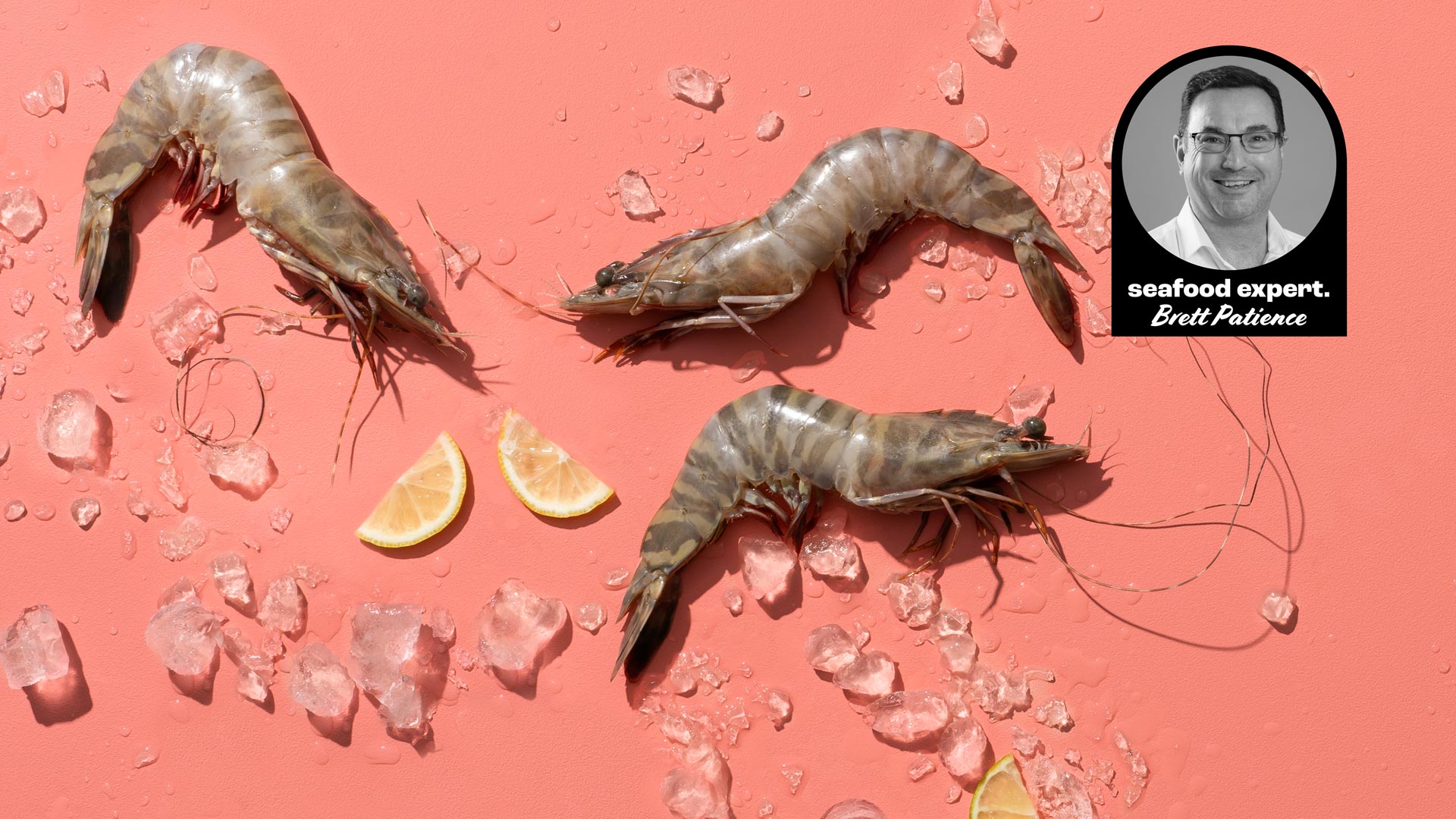
Seafood expert Brett Patience spends much of his time travelling the globe in search of the finest catch, but it’s the flavours of Southeast Asia that continue to inspire him. From Vietnam to Malaysia, Thailand to the Philippines, seafood is woven into daily life and the culinary traditions of the region. In the latest edition of The Catch, Brett shares how those dishes inspire him at home in Australia – from vibrant prawn salads and tangy soups to fragrant curries and wok-fried fish – and why sustainable prawns, ling and barramundi remain essential on modern menus.
I travel a lot for work, sourcing the best seafood from around the world. I love it when meetings take me to Southeast Asia because I love the food. The healthiness, the lightness, the focus on quality and freshness. And with so many people living along the coast and waterways, seafood is central to the cuisines of Cambodia, Vietnam, Thailand, Laos, Malaysia, Singapore and Indonesia. Thankfully, I don’t have to travel every day to enjoy great Asian seafood dishes. We’re spoiled for choice here in Australia.
I love classic prawn dishes like gỏi tôm – a fresh and tangy Vietnamese prawn salad with herbs, shredded vegetables and peanuts. I also enjoy exploring new Filipino restaurants and trying prawn sinigang, a sour tamarind-based soup with prawns, water spinach, radish and tomatoes. Whether it’s plump, prawn-filled rice paper rolls, an aromatic prawn laksa or a plate of golden noodles and fat prawns in a Penang hokkien char, prawns are essential to great Southeast Asian dishes.
Raised on sustainable farms in Vietnam and Thailand, vannamei prawns are a great value-for-money choice. They come in a variety of formats, including whole cooked – harvested, cooked immediately in brine and snap-frozen. With the deep red hue that Australian diners love, they look great in a spicy Nyonya prawn sambal or used to make tom yum goong, where the heads and shells are used to enrich the broth.
Sometimes, chefs just need prawn meat – no shell, no tail. Frozen prawn meat is ideal for finely chopping and blending with pork mince to fill dumplings, from prawn siomai in the Philippines to ngoh hiang in Malaysia – juicy little morsels flavoured with five spice, wrapped in beancurd skin and deep-fried. Minced even finer, prawns can be mixed with finely sliced makrut lime leaves and red curry paste, shaped into small discs and deep-fried for succulent tod mun goong – Thai prawn cakes. If you’re making Thai fish cakes, I always recommend using value white fish like basa or tilapia.
Tail-on prawn cutlets maintain their crunch and have great texture and eye appeal in noodle dishes such as pad Thai, where the flash of red tail contrasts beautifully with the deep golden noodles seasoned with soy and palm sugar. Although originally from Japan, ebi tempura is hugely popular in Southeast Asia in which tail-on prawn cutlets are battered, deep-fried until light and crisp and served with wasabi mayo.
For those wanting to put wild-caught Australian prawns on the menu, MSC certified eastern king prawns and banana prawns caught in the Gulf of Carpentaria are excellent choices. Locally produced, they’re available whole cooked, as raw meat or as raw tail-on cutlets – a premium offering for chefs.
I’m a big fan of Thai green seafood curry and always look for a white fish that’s boneless with great texture that holds during cooking. New Zealand ling fits the bill. It’s firm, clean in flavour, portions evenly and retains its integrity during cooking and storage.
I also love Cambodian food and have enjoyed ling served in amok trey – white fish steamed in banana leaves with coconut milk, lemongrass, turmeric and kaffir lime leaves. A luscious, fragrant and silky dish. Sometimes I’ve seen it used in tom kha pla, the more aromatic cousin of tom yum – a coconut-based soup with tender white fish, galangal, lemongrass, kaffir lime leaves and mushrooms.
Then there’s the boat-cut barramundi, a 300–500g whole barramundi filleted from the top of the dorsal fin to the belly with the back and rib bone removed via the spine, leaving the belly intact. I recently visited a Thai restaurant where it was seasoned and wok-fried until crisp. Drizzled with sweet, salty and sour nam prik, it was filled with som tum – green papaya salad. It was so delicious and crisp and because it had not a single bone, I ate the lot – skin and all. It was light, healthy, slightly exotic and absolutely delicious – everything I love about Southeast Asian seafood cooking.
Find the recipe here.