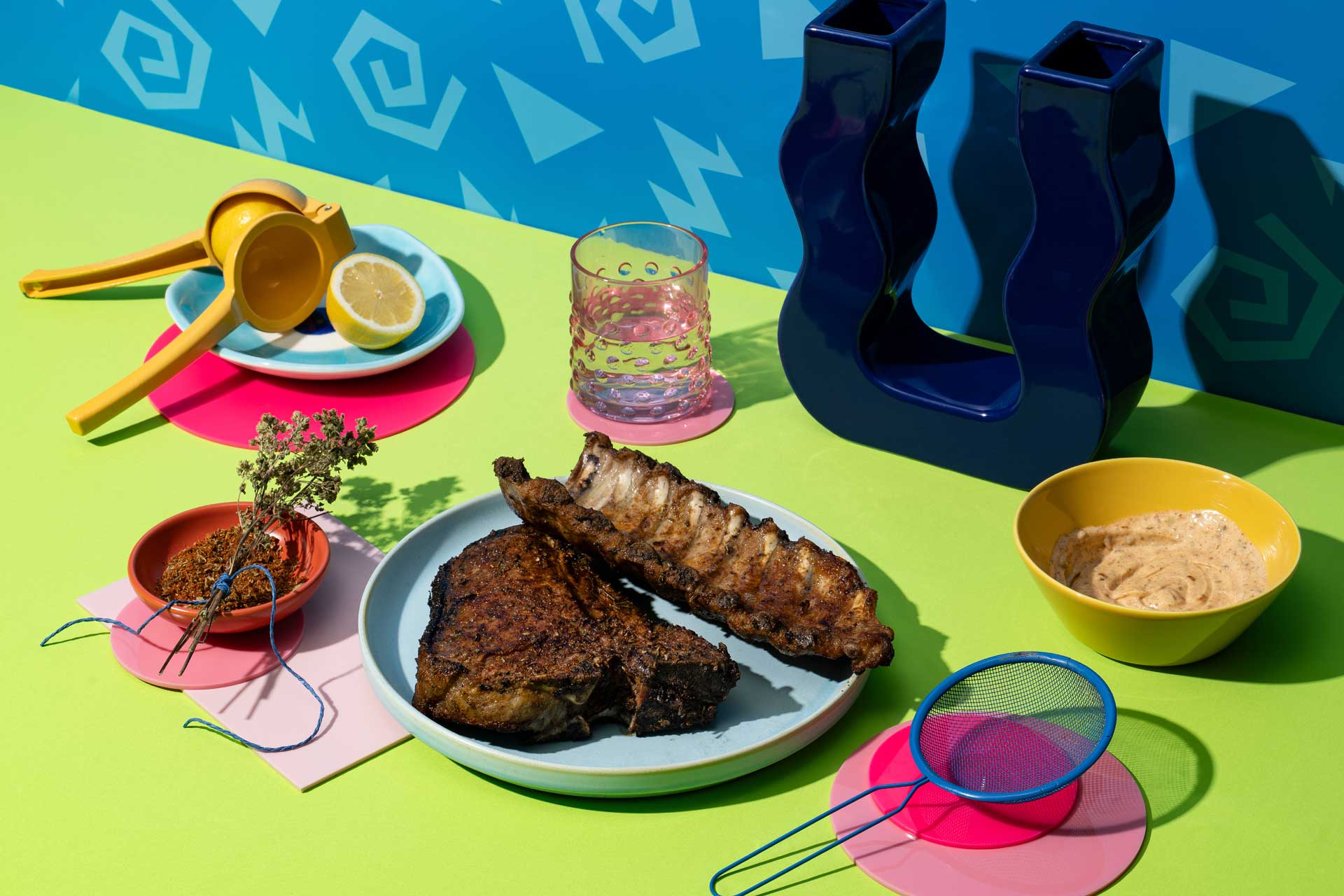


Summer is the season of steak for me. Beautifully seared cuts with even grill marks that reveal a pink, juicy and succulent interior when sliced with a sharp knife. But over the years, I’ve come to appreciate that not all steaks are created equal. The way cattle are raised and fed makes a world of difference to what ends up on the plate.
When I was an apprentice, I only knew grass-fed beef. I was working in an upmarket butchery in Lindfield on Sydney’s North Shore. The butcher specialised in dry-aged, grass-fed beef, so I grew up with that full, meaty flavour grass-fed is known for. Then I discovered the tenderness and consistency of grain-fed beef. Today, I love both. And for different reasons.
Recently in Hobart, I had two sensational steaks. One was a grass-fed cube roll at St. Albi Bar & Eatery. It was so full of flavour. The table was set with a sharp steak knife that cut perfect slices. The other was a 500g Black Onyx, 200-day grain-fed rump at Ball & Chain Grill. Cooked over charcoal, it was a lesson in tenderness. It had great flavour and was consistently tender in every mouthful. Tasting them side by side really drove home the contrast between grass-fed and grain-fed beef and why I appreciate them both for different reasons.
Grass-fed beef comes from cattle that have spent their lives grazing on pasture. It has a rich, deep, beefy flavour. But not all grass-fed beef is the same. It can be affected by seasonal variation and climate. It can especially make a difference to tenderness if the cattle have had to forage extensively or weren’t raised under optimal welfare conditions.
That’s why provenance matters. Look for beef from experienced farmers who manage their pastures well and care for their herds. I like our Emerald Valley beef, grown in the Northern Rivers region of New South Wales. The climate there is perfect for cattle, the soil is rich and the pastures are lush and nutritious. The beef that comes from these ideal conditions is always good eating. Grass-fed beef also has a great healthy story with many retail butchers ordering for their customers who prefer leaner red meat.
Cattle fed on grain, on the other hand, produce beef that’s undeniably more tender, cooks more consistently and offers more uniform portions. It’s the go-to choice for many chefs who want control over their menus.
Grain-feeding has a big impact on how beef tastes and feels. It boosts marbling, which adds to the flavour and tenderness. As the intramuscular fat renders during cooking, it runs through the muscles, making them super tender, succulent and slightly buttery on the palate. The highenergy feed also gives the fat a lighter colour than you’d see in grass-fed beef. To be classed as grain-fed, cattle need to spend at least 100 days on a grain-based diet, according to the National Feedlot Accreditation Scheme. There’s also a grain-fed finished category for cattle that have been on grain for at least 35 days. Some premium beef is fed for 150 days or more. And at the top end, long-fed cattle can stay on grain for up to 300 days, producing that beautifully marbled, melt-in-the-mouth beef. Bounty Premium is a grain-fed beef where the focus is on quality and tenderness, using yearling cattle fed for a minimum of 100 days on a grain-based ration.
For me, rump is the perfect steak for summer, whether grain-fed or grass-fed. It’s cut from the hip – working muscles with great flavour without being too tough. I love the rump cap from grass-fed cattle – it has a nicely formed layer of fat, but not too much. Perfect for a dish like picanha. This Brazilian barbecue classic sees the rump cap skewered in a crescent-moon shape and grilled over coals, bringing out that beefy, grass-fed flavour. Topped with a tangy chimichurri sauce that leaves a clean zing on the palate, it’s a great hot season meal.
The remaining muscle group is called the rosbif. It’s a great cut for slicing into 200g steaks – whether grass-fed or grain-fed – although grain-fed rosbif has the edge for tenderness and a little extra marbling.
The big thing to remember with all steak is to let it rest. Resting allows the steak to reabsorb some of the juices released during cooking, leading to a deliciously tender result. And never forget the sharp steak knife. If a customer struggles to cut a steak, no matter what the texture of a steak, they’re going to think it isn’t tender!
Summer is the season of steak for me. Beautifully seared cuts with even grill marks that reveal a pink, juicy and succulent interior when sliced with a sharp knife. But over the years, I’ve come to appreciate that not all steaks are created equal. The way cattle are raised and fed makes a world of difference to what ends up on the plate.